

Artificial intelligence is entering a new phase. For years, most people experienced AI (AI Software & AI Web) through chatbots that answered questions, generated content, or supported basic tasks. Now, a new generation of assistants is emerging, tools that don’t just respond, but actively take action.
At the center of this shift is ClawdBot, a viral open-source AI (AI Software & AI Web) assistant that has captured the attention of developers, productivity enthusiasts, and technology leaders worldwide. From Silicon Valley engineers sharing automation workflows to GitHub communities building integrations at lightning speed, ClawdBot has grown from an experimental side project into one of the most talked-about AI (AI Software & AI Web) tools today.
What Is ClawdBot?
(Image Source: Clawdbot)
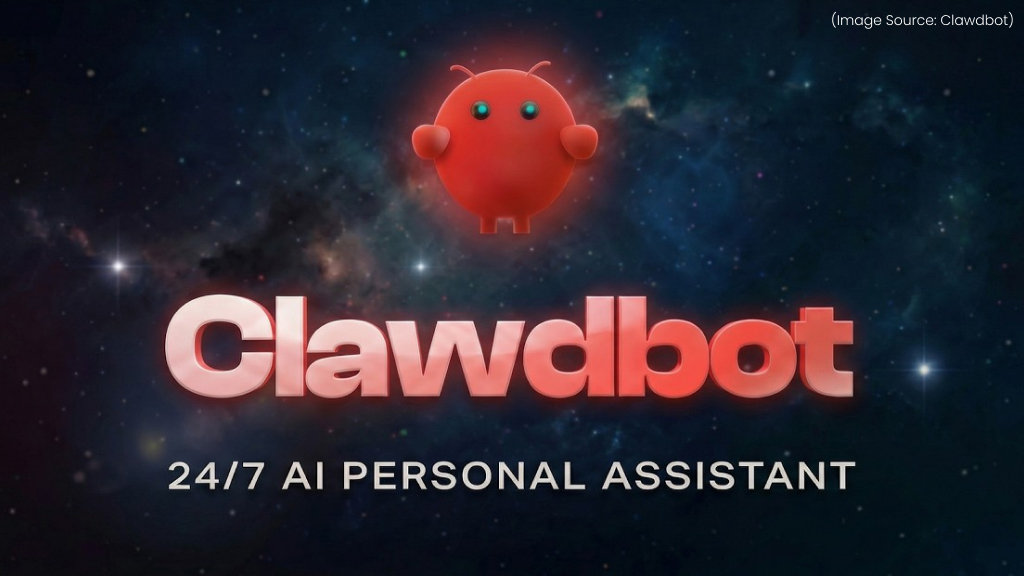
ClawdBot is an open-source AI (AI Software & AI Web) personal assistant built to run locally on a computer, private server, or virtual environment. Unlike cloud-only chatbots that rely entirely on external infrastructure, it connects directly with a user’s system, applications, and workflows to carry out real actions rather than just generating responses. This makes it particularly appealing for users who value control, customization, and data privacy.
At its core, ClawdBot operates as a self-hosted AI (AI Software & AI Web) agent, a messaging-based assistant, a persistent memory system that retains context over time, and an automation engine capable of handling repetitive digital tasks. The project was initiated by developer and entrepreneur Peter Steinberger from Austria, and has quickly evolved with strong community involvement.
Over time, the project also went through naming discussions, starting as ClawdBot, briefly referred to as Moltbot, and now operating as OpenClaw, while maintaining the same vision, functionality, and underlying technology.
The Rise of ClawdBot
(Image Source: Clawdbot)
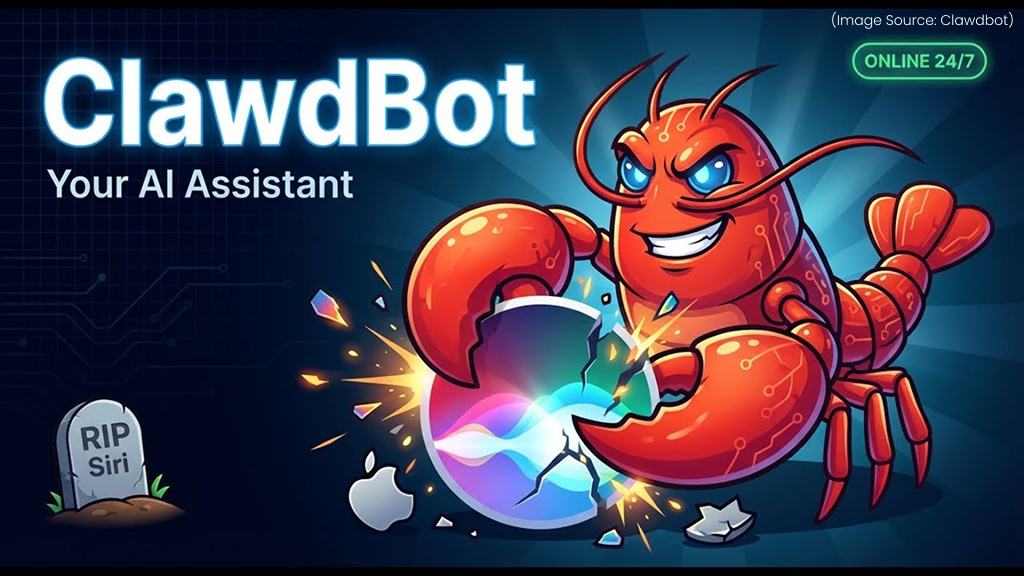
ClawdBot didn’t become popular through a major corporate launch or flashy marketing campaign. Instead, its growth has been organic and community-driven.
-
Loyal User Base Among Early Adopters
The first users were technical users experimenting with AI (AI Software & AI Web) agents. Many began running ClawdBot on dedicated machines, old laptops, Mac minis, or virtual servers, integrating it with their emails, calendars, messaging platforms, and productivity tools.
As they shared their workflows online, the project began attracting attention. Developers posted demos of ClawdBot automatically triaging inboxes, generating daily reports, and running multi-step automation tasks. The excitement spread quickly among technical communities. A strong following quickly formed, particularly among early adopters eager to explore the next generation of AI (AI Software & AI Web) productivity tools.
-
Viral Growth Across GitHub and Social Platforms
ClawdBot’s GitHub repository saw rapid adoption, with developers contributing plugins, fixes, and integrations. Social media platforms amplified this momentum. Threads, short demo videos, and tutorials showed how ClawdBot could automate real tasks, something many AI (AI Software & AI Web) tools promised but rarely delivered effectively.
Communities on X, Reddit, and Hacker News played a major role in pushing the project into mainstream tech conversations.
-
The Shift Toward Agentic AI
Perhaps the biggest reason for ClawdBot’s rise is timing. The AI (AI Software & AI Web) industry is moving from conversational models to agentic systems, tools that can observe, decide, and act. While chatbots answer questions, AI (AI Software & AI Web) agents execute workflows. This transition from “AI (AI Software & AI Web) that talks” to “AI (AI Software & AI Web) that works” is reshaping how individuals and businesses think about artificial intelligence. ClawdBot sits right at the heart of this transformation.
How ClawdBot Works

Understanding ClawdBot requires looking at how it’s deployed and how it interacts with AI (AI Software & AI Web) models and systems.
-
Self-Hosted Infrastructure
ClawdBot is typically installed on a local machine, private server, or virtual environment. Running it locally gives users control over data and customization while reducing dependence on external services. For privacy-conscious users, this is a major advantage.
-
AI (AI Software & AI Web) Model Integration
ClawdBot integrates with large language models like GPT, Claude, and locally hosted alternatives to power reasoning and natural language understanding. While these models interpret intent and generate responses, ClawdBot focuses on execution, automating tasks, triggering actions, and coordinating workflows across connected systems and tools.
-
Messaging-First Interaction
Rather than requiring users to learn a new interface or dashboard, ClawdBot fits into platforms they already use daily, such as WhatsApp, Telegram, Slack, Discord, and email. Interactions feel natural and conversational, much like messaging a colleague. This familiar communication style lowers the learning curve and makes adopting AI (AI Software & AI Web) assistance seamless within existing workflows.
-
Skills, Plugins, and Execution Engine
ClawdBot is built around a modular skills, plugins, and execution engine that enables it to perform actions across different systems and environments. These capabilities allow it to run scripts, access APIs, manage files, and automate complex workflows with minimal manual intervention.
Instead of being limited to pre-defined functions, the platform encourages developers to create and share new skills, making the assistant highly adaptable and continuously evolving. This modular approach ensures that ClawdBot can expand over time, learning to support new tools, platforms, and use cases as community contributions grow.
Key Features That Make ClawdBot Different
ClawdBot combines multiple capabilities into a single assistant.
1. Persistent Memory
ClawdBot is designed to retain context across interactions, allowing it to function more like a long-term digital assistant than a one-time chatbot. It remembers user preferences, workflows, past conversations, and recurring tasks, which helps it deliver more relevant suggestions and actions over time. This continuity reduces the need for repeated instructions and improves productivity as the assistant becomes more familiar with the user’s habits and priorities.
2. Local Operation
One of ClawdBot’s biggest differentiators is its ability to run locally on personal systems, private servers, or virtual environments. This gives users greater control over their data, security settings, and customization. For individuals and organizations concerned about privacy or compliance, local deployment ensures that sensitive information remains within their own infrastructure while still benefiting from AI-driven automation.
3. Multi-Platform Integration
ClawdBot integrates with platforms people already use, including messaging apps, collaboration tools, and email systems. Instead of forcing users into a separate dashboard, it fits into existing digital environments and workflows. This reduces friction and makes adoption easier, as users can interact with the assistant through familiar communication channels without changing how they work.
4. Real Task Execution
Unlike traditional AI (AI Software & AI Web) tools that only suggest actions, ClawdBot is built to perform them. It can schedule meetings, send emails, organize files, trigger scripts, and coordinate workflows across applications. This ability transforms the assistant from a conversational tool into an operational one, helping users move from planning to execution with minimal manual effort.
5. Proactive Automation
ClawdBot is not limited to reactive responses. It can monitor triggers, events, and patterns, and then take action automatically. Whether it’s sending reminders, generating alerts, or initiating workflows, the assistant works in the background to keep processes moving. This proactive approach reduces oversight and ensures important tasks don’t fall through the cracks.
6. Plugin Ecosystem
The assistant supports a growing ecosystem of plugins and modular skills that expand its capabilities. Developers can create integrations tailored to specific tools, industries, or workflows, allowing ClawdBot to adapt to different use cases. This flexibility ensures that the platform continues to evolve as new technologies and user needs emerge.
7. Multi-Model Flexibility
ClawdBot can connect to multiple AI (AI Software & AI Web) models, including cloud-based and locally hosted options. Users can choose models based on performance, cost, privacy, or specific capabilities. This flexibility ensures the assistant remains future-ready and adaptable as the AI (AI Software & AI Web) landscape continues to evolve.
What Can ClawdBot Actually Do?
ClawdBot is designed to move beyond conversations and into real productivity, helping users complete tasks, automate workflows, and manage digital operations more efficiently. Instead of acting as a simple Q&A chatbot, it functions as a hands-on assistant that can interpret instructions and execute them across connected tools and systems.
On a practical level, ClawdBot can manage everyday productivity tasks such as scheduling meetings, drafting and sending emails, organizing files, and setting reminders. It can also run scripts, connect with APIs, and automate repetitive workflows that typically require manual effort. For professionals, this means less time switching between apps and more time focusing on meaningful work.
Tech-savvy users can leverage ClawdBot to monitor systems, trigger actions based on predefined conditions, and integrate it into development environments or business tools. Teams can use it for coordination, updates, and task tracking within communication platforms they already rely on.
Beyond routine tasks, ClawdBot can assist with research, summarization, idea generation, and documentation while simultaneously taking action on those outputs. For example, it can summarize a discussion, convert it into a task list, and initiate the next steps automatically.
Ultimately, ClawdBot acts as a bridge between thinking and doing, combining intelligence, automation, and execution into a single assistant that supports both personal productivity and organizational workflows.
Why ClawdBot Went Viral
(Image Source: Clawdbot)
Several factors played a role in ClawdBot’s rapid rise in popularity, especially within tech communities and productivity-focused audiences. First, its open-source nature made it instantly appealing to developers and organizations. People could explore the code, customize features, and experiment with new use cases without restrictions. This transparency built trust and encouraged collaboration, helping the project grow quickly through community contributions.
Second, ClawdBot demonstrated real automation rather than just talking about it. While many AI (AI Software & AI Web) tools promise productivity improvements, ClawdBot showcased practical execution, handling tasks, running workflows, and interacting with systems in real time. These tangible outcomes made its value easy to understand.
Third, the idea of an AI (AI Software & AI Web) assistant that “works while you sleep” strongly captured user imagination. The concept of delegating routine tasks to an always-on digital assistant resonated with professionals looking to save time and increase efficiency. It positioned ClawdBot as more than a tool, as a productivity partner.
Finally, social media played a powerful role in amplifying its reach. Short demos showing ClawdBot completing complex tasks were highly shareable and easy to grasp, sparking curiosity and conversations. As more users shared their experiences and experiments, momentum built quickly, turning ClawdBot into a widely discussed AI (AI Software & AI Web) assistant.
ClawdBot vs Other AI (AI Software & AI Web) Assistants
While popular tools like ChatGPT, Claude, and Gemini focus heavily on conversation, research, and content generation, ClawdBot positions itself as an execution-first assistant, built not just to respond, but to act.
-
Deployment
One of the biggest differences lies in deployment. Most mainstream AI (AI Software & AI Web) assistants are cloud-based and accessed through web or app interfaces. ClawdBot, on the other hand, can run locally on personal systems or private servers. This gives users greater control over data, privacy, and customization, an important advantage for enterprises and privacy-conscious users.
-
Functionality
Another key distinction is functionality. Traditional AI (AI Software & AI Web) assistants excel at answering questions, writing content, summarizing information, and brainstorming ideas. ClawdBot extends this capability into operational workflows. It can run scripts, automate processes, interact with APIs, manage files, and execute real tasks across connected tools. In simple terms, many AI (AI Software & AI Web) assistants think and suggest; ClawdBot thinks and does.
-
Integration
Integration also sets it apart. While most AI (AI Software & AI Web) tools operate within their own interfaces, ClawdBot embeds itself into platforms people already use, such as messaging apps, collaboration tools, and email. This makes interaction feel more natural and reduces the need to switch between applications.
-
Customization
Customization is another differentiator. Closed AI (AI Software & AI Web) platforms typically limit how much users can modify behavior or add new capabilities. ClawdBot’s open, modular architecture allows developers to build plugins, add skills, and shape the assistant around specific workflows or industries. This flexibility makes it more adaptable than one-size-fits-all AI (AI Software & AI Web) tools.
-
Flexibility
ClawdBot also offers multi-model flexibility, enabling users to connect different large language models based on cost, performance, or privacy needs. In contrast, many assistants are tied to a single ecosystem or provider.
However, it’s important to note that ClawdBot and traditional AI (AI Software & AI Web) assistants are not direct replacements for one another. Tools like ChatGPT remain highly effective for research, writing, and conversational support, while ClawdBot is better suited for automation, execution, and workflow management. In many cases, they complement each other.
Benefits of Using ClawdBot
ClawdBot offers several advantages:
1. Automates repetitive tasks
ClawdBot helps eliminate time-consuming routine work by handling tasks such as scheduling, reminders, file organization, workflow triggers, and system actions. By automating these processes, users can focus on higher-value work instead of spending time on repetitive digital operations.
2. Learns user preferences over time
With its persistent memory and contextual awareness, ClawdBot gradually adapts to individual habits, priorities, and workflows. It remembers recurring instructions and patterns, allowing it to deliver more relevant suggestions and actions, which improves efficiency and personalization with continued use.
3. Reduces manual workload
By combining AI (AI Software & AI Web) reasoning with execution, ClawdBot reduces the need to switch between apps, manually manage tasks, or follow up on routine actions. It acts as a productivity partner that handles background processes, freeing users to concentrate on decision-making and creative work.
4. Provides control over data
Because it can run locally or within private environments, ClawdBot gives users greater ownership of their data and security settings. This is especially valuable for professionals and organizations dealing with sensitive information, where privacy and compliance are critical.
5. Supports local AI (AI Software & AI Web) models to reduce costs
ClawdBot can connect with locally hosted language models, reducing reliance on paid cloud-based AI (AI Software & AI Web) services. This flexibility allows users to manage operational costs while still benefiting from AI-powered automation and intelligence.
6. Enables experimentation and workflow optimization
For technical users, ClawdBot opens opportunities to build custom automations, test new integrations, and refine workflows. Its modular and open approach encourages innovation, making it a powerful tool for exploring how AI (AI Software & AI Web) can enhance real-world productivity.
ClawdBot reflects a larger shift toward autonomous AI (AI Software & AI Web) agents that can move beyond conversations and actively manage tasks, workflows, and digital operations. Businesses and individuals are beginning to explore these assistants for productivity, automation, and operational efficiency, with the long-term vision of AI (AI Software & AI Web) systems that function more like digital coworkers. At the same time, challenges around security, reliability, and governance remain, meaning adoption will likely happen gradually as the technology matures.
As a platform, ClawdBot stands out for its automation capabilities, customization, and local control, while also presenting complexities that require technical understanding and careful implementation. For developers and early adopters, it opens significant possibilities for experimentation and workflow transformation. For everyday users, however, it may still feel early in its evolution.
What’s certain is that ClawdBot represents the next phase of AI, where assistants are no longer limited to responding, but are increasingly designed to take action and execute tasks in the real world.