


As the world accelerates toward electrification, the demand for batteries is skyrocketing. Lithium-ion has led this revolution for decades, powering everything from smartphones to electric vehicles to grid-scale storage systems. But the next wave of innovation is already taking shape, and it’s built on sodium.
Sodium-ion batteries (often called Na-ion batteries) are emerging as one of the most promising alternatives to lithium, offering a safer, more sustainable, and more cost-effective option for a wide range of industries.
Let us explore why the world needs a strong alternative to lithium, what makes sodium-ion batteries so special, the breakthroughs pushing them into mainstream adoption, and where these batteries are most likely to dominate in the coming years.
Why We Need an Alternative to Lithium?
Lithium-ion batteries have been the backbone of modern electronics and electric mobility, but the global energy transition has put enormous pressure on lithium supply chains. Lithium mining is highly concentrated in a few countries, making the industry vulnerable to geopolitical tensions, export restrictions, and price fluctuations.
End users, from automakers to energy companies, have already witnessed massive spikes in lithium prices over the past few years, leading to rising battery costs and delayed projects.
Meanwhile, the environmental footprint of lithium extraction is drawing increased scrutiny. Mining operations are water-intensive, disruptive to local ecosystems, and often linked to social and regulatory challenges. As the demand for large-scale batteries continues to rise, especially for renewable-energy storage and vehicle fleets, the world needs additional chemistries that reduce dependence on a single critical mineral.
This is where sodium truly stands out, offering a combination of abundance, low cost, wide geographic availability, and a far more environmentally friendly sourcing process. It eliminates the vulnerabilities tied to lithium while enabling battery manufacturers to scale sustainably.
What Makes Sodium-Ion Batteries Special?
Sodium-ion batteries bring a compelling set of advantages that make them stand out in today’s rapidly evolving energy landscape. Although they operate on principles similar to lithium-ion batteries, the shift from lithium to sodium as the charge carrier unlocks benefits that go far beyond simple chemistry.
To begin with, sodium is one of the most abundant elements on Earth, found in seawater, mineral deposits, and across virtually every region of the world. This abundance translates into significantly lower raw-material costs and eliminates many of the geopolitical risks associated with lithium, which is concentrated in a handful of countries. As global demand for batteries increases, the stability and scalability of sodium sourcing become invaluable for manufacturers and governments alike.
Another major advantage lies in the inherent safety and stability of sodium-ion chemistry. Sodium-ion cells are less prone to overheating and thermal runaway, making them ideal for large-scale systems such as renewable-energy storage, home batteries, and industrial backup power. Their safety profile reduces engineering complexity and improves reliability, especially in installations that operate continuously or in extreme climates.
Sodium-ion batteries also demonstrate strong performance in low temperatures, a scenario where lithium-ion cells can struggle. This makes them better suited for regions with cold winters as well as applications requiring consistent output across varying environmental conditions.
Perhaps one of the most underrated advantages is their compatibility with existing lithium-ion manufacturing lines. Manufacturers can transition to sodium-ion production without building entirely new factories, dramatically cutting down capital expenditure and accelerating market adoption.
Together, these advantages position sodium-ion batteries as a practical, scalable, and sustainable alternative that complements, rather than replaces, existing lithium technologies.
The Breakthroughs Driving Sodium-Ion Momentum
Sodium-ion batteries are advancing rapidly thanks to several key breakthroughs across materials science, manufacturing, and system engineering. These developments are transforming the technology from a long-standing research concept into a commercially ready solution.
1. Advanced Electrode Materials
Recent innovations in electrode design have significantly boosted the performance and reliability of sodium-ion batteries. Advances such as layered oxide cathodes, which enable smoother ion movement and deliver higher capacity, have played a major role in improving efficiency. At the same time, Prussian blue analogue cathodes are offering exceptional stability and long cycle life, making the chemistry more durable for real-world applications.
Complementing these developments are engineered hard-carbon anodes, specifically designed to accommodate sodium’s larger ion size while enhancing both energy density and charging efficiency. Together, these breakthroughs are helping sodium-ion technology narrow the performance gap with established lithium chemistries like LFP, making it a far more competitive and attractive option for manufacturers.
2. Commercial Production Lines and Pilot Deployments
Sodium-ion technology is no longer limited to laboratory research; it is now moving rapidly into commercial territory. Several manufacturers have already established production lines at scale, using adapted lithium-ion manufacturing processes to keep setup costs low and streamline the transition.
As a result, the first generation of sodium-ion cells is being deployed in real-world environments, including renewable-energy farms, telecom backup systems, industrial storage installations, and small electric vehicles. This evolution from prototypes to practical applications has significantly accelerated the technology’s development and validation, proving its readiness for broader adoption.
3. Growing Support from Automakers and OEMs
Industry interest in sodium-ion batteries is growing quickly as the chemistry continues to mature. Automakers are increasingly viewing sodium-ion as a strong fit for city-focused EVs, electric scooters, and compact commercial vehicles, segments that don’t demand extremely high energy density but benefit greatly from lower costs and strong safety profiles.
Its superior performance in cold climates further enhances its attractiveness, especially for regions where lithium-ion batteries struggle. At the same time, OEMs are experimenting with hybrid battery systems that pair sodium-ion cells for daily short-range driving with lithium-ion packs designed for extended travel, creating a balanced approach that optimizes both affordability and range.
4. Advances in Battery Management and System Integration
Improved system-level engineering is significantly enhancing the reliability of sodium-ion batteries. With BMS algorithms now tailored specifically to sodium-ion characteristics, these batteries can charge more safely and efficiently.
At the same time, advancements in thermal management are ensuring better stability and performance across a range of climates. Complementing these improvements are refinements in pack-level design, which help maintain consistent power output and extend overall battery lifespan, making sodium-ion solutions more robust and commercially viable.
Together, these breakthroughs are rapidly pushing sodium-ion batteries toward mainstream commercial adoption and shaping them into a major player in the future energy ecosystem.
Where Sodium-Ion Batteries Fit Best
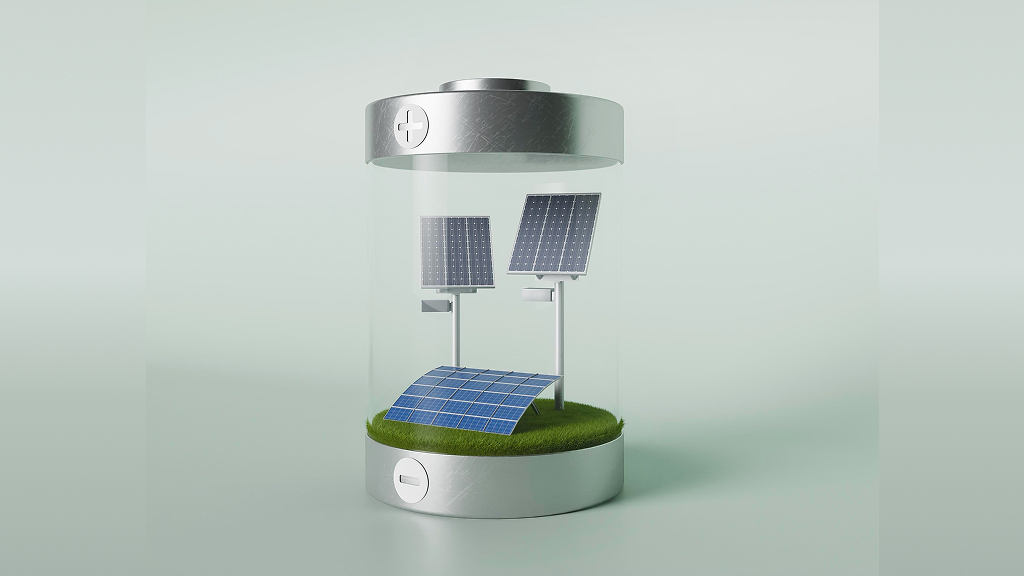
Sodium-ion batteries are not designed to replace lithium-ion across every application. Instead, they shine in areas where cost, safety, stability, and sustainability matter more than achieving the highest possible energy density. Below are the segments where sodium-ion is positioned to deliver the greatest impact.
1. Grid-Scale Renewable Energy Storage
- Sodium-ion is exceptionally well-suited for utility-scale solar and wind farms, where cost per kWh and cycle stability matter more than compact size.
- These installations typically have the physical space to accommodate larger battery systems, meaning sodium-ion’s lower energy density is not a limiting factor.
- Sodium-ion batteries offer strong durability under daily deep cycling, handling full charge and discharge cycles with minimal degradation.
- Utilities value sodium-ion’s thermal stability, as it reduces the need for expensive cooling infrastructure.
- This enables cleaner, more reliable energy storage to support grid balancing, peak shaving, and renewable integration.
- The low cost storage makes renewable energy more competitive on a global scale.
2. Community Microgrids and Rural Electrification
- Sodium-ion fits perfectly into community-level microgrids, especially in rural or remote regions where reliability and low cost are essential.
- These systems can power islands, off-grid villages, mining sites, military bases, industrial parks, and disaster-relief zones.
- Their ability to operate across extreme temperatures is crucial in areas with harsh weather or unpredictable conditions.
- Sodium-ion’s stable chemistry supports high safety requirements, reducing fire risks in tightly packed or underserved communities.
- The lower manufacturing cost, resulting from abundant raw materials, makes it easier for governments and NGOs to deploy microgrids at scale.
- As a result, sodium-ion has the potential to accelerate global efforts toward energy access and rural electrification.
3. Low-Speed and Urban Electric Mobility
- Sodium-ion batteries align well with the needs of urban EVs, where long-range performance is less important than affordability, safety, and reliability.
- Suitable vehicle types include; Electric scooters and motorcycles, E-bikes and delivery bikes, Small city EVs, Compact commercial vehicles, and Three-wheelers and micro-mobility fleets.
- These vehicles operate mostly within cities, where routes are shorter and charging is frequent.
- Sodium-ion’s ability to maintain performance in cold climates gives it an edge in winter-prone regions, where lithium-ion efficiency drops.
- For fleet operators, sodium-ion packs promise lower TCO (total cost of ownership) due to cheaper cell materials and simpler thermal management.
- In growing EV markets, especially in developing economies, sodium-ion could help democratize clean mobility.
4. Power Tools, Industrial Equipment and Light Machinery
- Sodium-ion performs impressively in applications where tools or equipment undergo frequent high-discharge cycles.
- It is ideal for power drills and handheld tools, warehouse equipment like pallet jacks, and small-scale industrial machinery.
- Their stable chemistry minimizes fire risks, important in indoor industrial environments with strict safety regulations.
- The long cycle life and low replacement cost make sodium-ion highly appealing for businesses looking to reduce operational expenses.
5. Residential Energy Storage and Smart Home Backup
- Sodium-ion batteries are increasingly being integrated into home energy storage systems, especially alongside rooftop solar.
- Homeowners gain several advantages, including more affordable battery packs, a safer and non-volatile chemistry, minimal cooling or ventilation needs, and stable performance during both extreme heat and cold.
- They are excellent for backup power during outages, energy arbitrage, and maximizing self-consumption of solar energy.
- As household demand for storage grows, sodium-ion offers a cost-effective, low-maintenance alternative to traditional lithium-based home batteries.
6. Telecom Towers & Critical Backup Infrastructure
Telecom towers demand batteries that can withstand high temperatures, support continuous cycling, operate reliably in remote locations, and function for long intervals without servicing. Sodium-ion batteries meet these requirements exceptionally well, offering durability and low maintenance that make them especially attractive for telecom networks in developing regions.
Beyond telecommunications, sodium-ion technology is also a strong fit for emergency lighting systems, data centers, rail signaling infrastructure, and industrial UPS units. Its capacity to provide dependable, temperature-resistant backup power makes it highly suitable for mission-critical applications where reliability cannot be compromised.
7. Hybrid Battery Architectures
Hybrid battery architectures are emerging as a practical strategy for integrating sodium-ion technology into mainstream applications. In these systems, sodium-ion cells are paired with lithium-ion batteries to balance cost, performance, and range.
Sodium-ion handles the daily short-range, shallow cycling needs, where affordability, safety, and temperature resilience matter most, while lithium-ion provides the higher energy density required for longer trips or peak performance.
This combined approach allows automakers and energy companies to optimize battery packs without compromising user expectations. As interest grows, hybrid designs may become a key transitional step, helping sodium-ion gain broader adoption across both mobility and stationary energy markets.
The Road Ahead for Sodium-Ion Batteries
Sodium-ion batteries are no longer an experimental technology, they’re stepping confidently into the real world with clear advantages and rapidly expanding applications. As industries push for safer, more affordable, and more sustainable energy storage, sodium-ion emerges as a timely and transformative solution. From powering microgrids and renewable farms to supporting urban mobility and critical infrastructure, its impact is already taking shape.
While lithium-ion will continue to dominate high-performance segments, sodium-ion offers the complementary strength needed to accelerate global electrification. With ongoing breakthroughs and growing commercial investment, sodium-ion batteries are poised to play a defining role in the future of clean energy.