


Every January, CES (Consumer Electronics Show) offers a glimpse into the future, but CES 2026 felt different. Instead of flashy concepts with little real-world relevance, this year’s show focused on practical intelligence, adaptive hardware, and technology that blends more naturally into everyday life.
Artificial intelligence was no longer just a feature; it was the foundation. Sustainability moved from marketing buzzword to measurable design goal. And hardware across categories, from laptops to home appliances, became smarter, more contextual, and more personal.
CES 2026 brought together genuinely useful innovations, delightfully wild experiments, and a handful of gadgets that made people pause and question their purpose. From AI-powered personal devices and rollable displays to robotic companions and mood-aware wearables, the showfloor was a reminder that technology still knows how to surprise us.
Let’s explore the best, and smartest gadgets and tech breakthroughs from CES 2026, highlighting the trends shaping what comes next.
1. Switchbot Onero H1
(Source Image: SwitchBot)
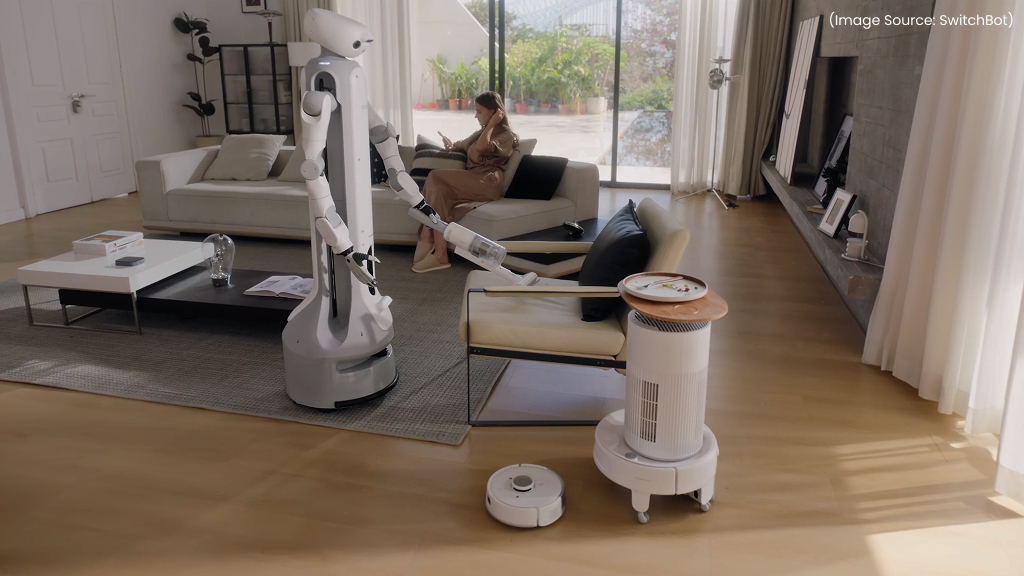
At CES 2026, SwitchBot unveiled the Onero H1, a wheeled humanoid robot built with a refreshingly practical goal of helping with real household chores instead of flashy, futuristic stunts. Rather than walking, the Onero H1 uses a wheel-based design for greater stability, paired with articulated arms and 22 degrees of freedom to handle everyday tasks.
During live demos, the robot successfully picked up laundry, loaded it into a washing machine, and closed the door, small but meaningful demonstrations of real-world usefulness.
At the core of the Onero H1 is SwitchBot’s on-device OmniSense vision-language-action model, which allows the robot to perceive its surroundings, understand tasks, and act autonomously without relying on the cloud. This local processing makes it better suited for home environments and tighter integration with SwitchBot’s existing smart home ecosystem.
While the robot completes tasks more slowly than a human, its focus on reliability and near-term deployment sets it apart from many CES prototypes. With SwitchBot aiming to release the Onero H1 later this year for under $10,000, it emerged as one of the most realistic and attainable home robots showcased at the event.
2. Roborock’s Saros Rover
(Source Image: Roborock)
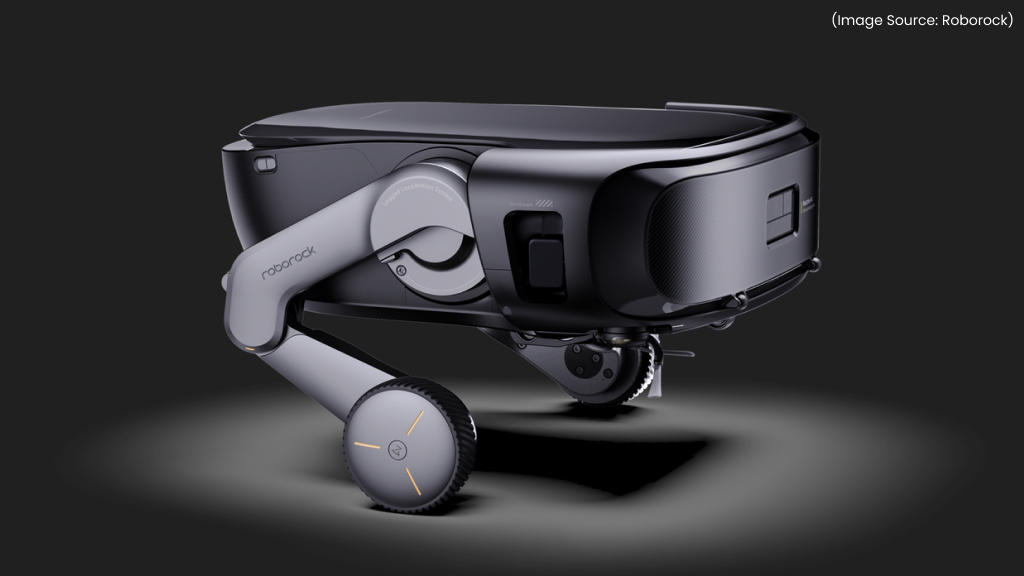
Unveiled at CES 2026, the Roborock Saros Rover reimagines what a robotic vacuum can do by tackling one of the category’s biggest limitations, stairs. Instead of traditional wheels, the prototype uses articulated, leg-like mechanisms that allow it to climb steps, cross thresholds, and clean individual stairs as it moves upward.
Powered by AI-driven navigation and advanced sensors, the robot can map multi-level homes, detect obstacles, and maintain balance on uneven surfaces. Designed to move, pivot, and even overcome obstacles in ways wheeled robots cannot, the Saros Rover remains a concept device, with an anticipated price between $2,000 – $3,000.
3. WheelMove

(Source Image: WheelMove)
Manual wheelchairs are widely available at airports, hotels, resorts, theme parks, and cruise terminals, but they often require constant physical effort and struggle on uneven or outdoor terrain. WheelMove aims to change that experience. Unveiled at CES 2026, the portable attachment converts a standard manual wheelchair into an electric, all-terrain mobility solution, offering greater ease and independence for travelers.
The patented, lightweight unit, under 8 kg, installs in seconds and features a 250 W motor paired with a 10-inch wheel that lifts the front casters, helping users navigate grass, dirt paths, cobblestones, and moderate slopes. With a top speed of up to 6 mph and a range of approximately 15.5 miles, WheelMove is designed for all-day use in large venues.
Controlled via a remote and powered by a swappable battery, the device reduces reliance on caregivers and allows users to move more freely through challenging environments. Priced at around $6,000, WheelMove represents a meaningful step toward more accessible travel for wheelchair users.
4. LG Wallpaper TV (OLED Evo W6)
(Source Image: LG)
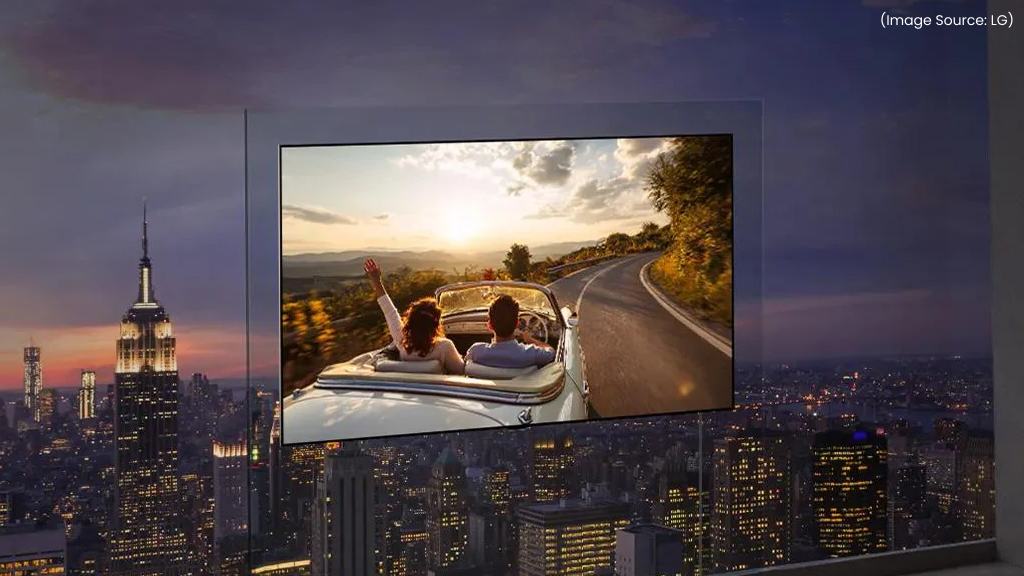
LG revived one of its most iconic designs at CES 2026 with the return of its Wallpaper TV, now reintroduced as the OLED evo W6. Measuring just 9mm thick, the ultra-slim panel mounts completely flush to the wall, once again blurring the line between television and interior design. While the minimalist form factor grabs immediate attention, the W6 is far more than a design statement.
Powered by LG’s new Hyper Radiant Color Technology and Brightness Booster Ultra, the panel delivers nearly four times the brightness of conventional OLED TVs, alongside richer color volume, deeper blacks, and improved reflection handling.
One of the most notable changes is what’s no longer attached to the screen itself. All physical ports and connections have been moved to LG’s Zero Connect Box, which wirelessly transmits audio and video to the TV from up to 10 meters away.
LG claims the connection remains visually lossless at 4K, eliminating visible cables without sacrificing performance. The W6 is driven by the Alpha 11 AI Processor Gen3, which uses a dual AI engine to enhance detail while avoiding overly aggressive processing. LG has yet to share pricing, sizes, or availability, but the OLED evo W6 signals a confident new direction for premium televisions.
5. TCL X11L SQD-Mini LED TV
(Source Image: TCL)
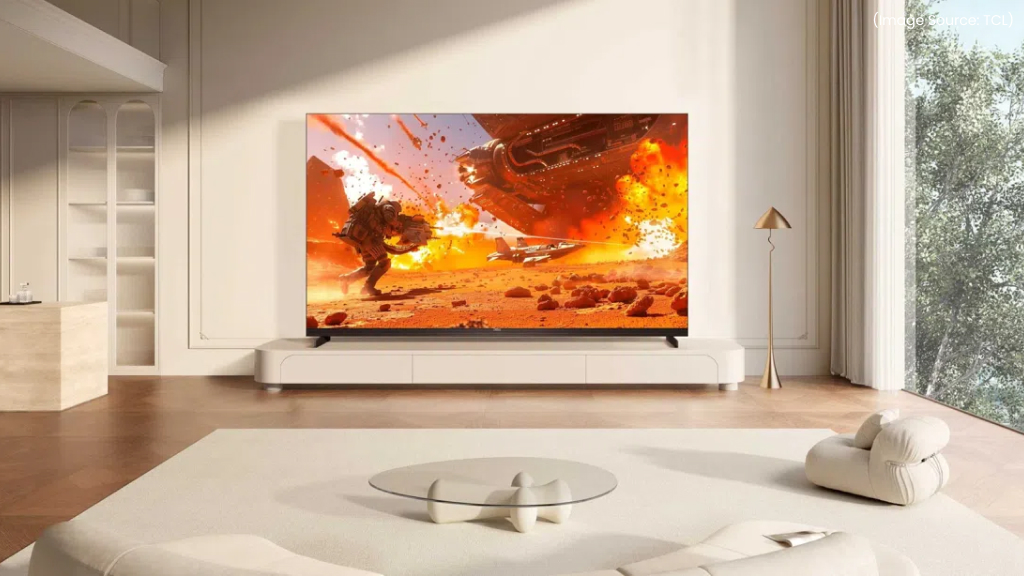
TCL took a different path at CES 2026, opting not to chase the RGB LED trend embraced by several competitors. Instead, the company doubled down on Mini-LED technology with its flagship X11L SQD-Mini LED TV, and the results were striking.
Built around blue LEDs, the X11L introduces two major innovations that set it apart: reformulated Super Quantum Dots and a new UltraColor Filter panel. Together, they allow the display to achieve full coverage of the BT.2020 color space, delivering exceptionally accurate and vibrant color reproduction rarely seen on consumer TVs.
Brightness is another standout, as the X11L can reach up to 10,000 nits of peak brightness and features more than 20,000 local dimming zones, enabling precise control over highlights and shadows while minimizing blooming. TCL pairs this with its WHVA 2.0 panel, offering 4K resolution at up to 144Hz for smooth motion and high-end gaming performance.
The premium hardware is matched by premium features, including Bang & Olufsen-tuned audio, Google TV with Gemini integration, and four HDMI 2.1 ports supporting high refresh rates. Offered in 75-, 85-, and 98-inch variants with pricing beginning at roughly $7,000, the X11L stands as TCL’s most premium television to date and a strong entry in the ultra-high-end TV segment.
6. Aqara Smart Lock U400
(Source Image: Aqara)
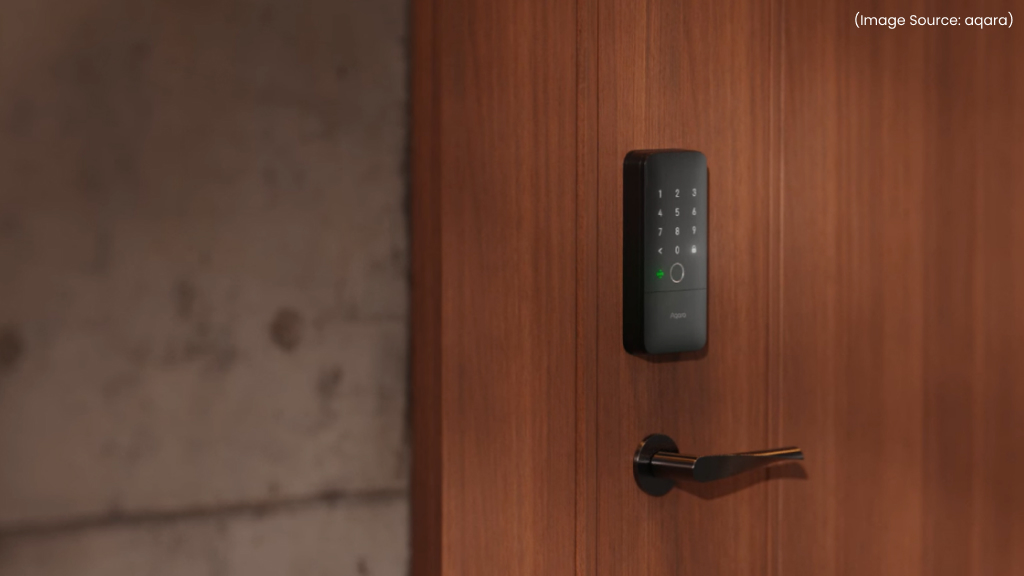
Smart locks once again emerged as smart home standouts at CES 2026, with new models showcasing facial recognition, palm-based unlocking, and experimental charging methods. Among them, the Aqara Smart Lock U400 stood out, not because it radically reimagines lock design, but because it demonstrates how open standards and mature technology can finally make smart homes simpler and more intuitive.
The U400 becomes the first smart lock to enable Apple’s hands-free Home Key feature, powered by ultra-wideband (UWB) technology. Instead of tapping a phone or entering a code, the lock automatically unlocks as an authorized user approaches with an iPhone in a pocket or an Apple Watch on the wrist.
UWB’s precise time-of-flight and angle-of-arrival tracking ensures the door unlocks only when the user is outside and within close range, reducing accidental triggers and improving security.
Aqara even allows users to set approach angles to further prevent unintended unlocks. Beyond Apple’s ecosystem, the U400 is a Matter-over-Thread device, making it compatible with Google Home, Amazon Alexa, Samsung SmartThings, Home Assistant, and Apple Home. It is also Aliro-ready, meaning future updates will enable Home Key–style hands-free unlocking and NFC tap-to-unlock on Android devices, a major step toward reducing smart home fragmentation.
The lock offers multiple access methods, including fingerprint recognition, NFC cards, passcodes, mobile apps, voice assistants, and a traditional key. Powered by a removable 4,880mAh USB-C rechargeable battery rated for up to six months, the U400 features IP65-rated exterior components and is available in black or silver. More than a single product win, the U400 signals a turning point for interoperable, genuinely user-friendly smart home security.
7. SwitchBot Weather Station
(Source Image: SwitchBot)
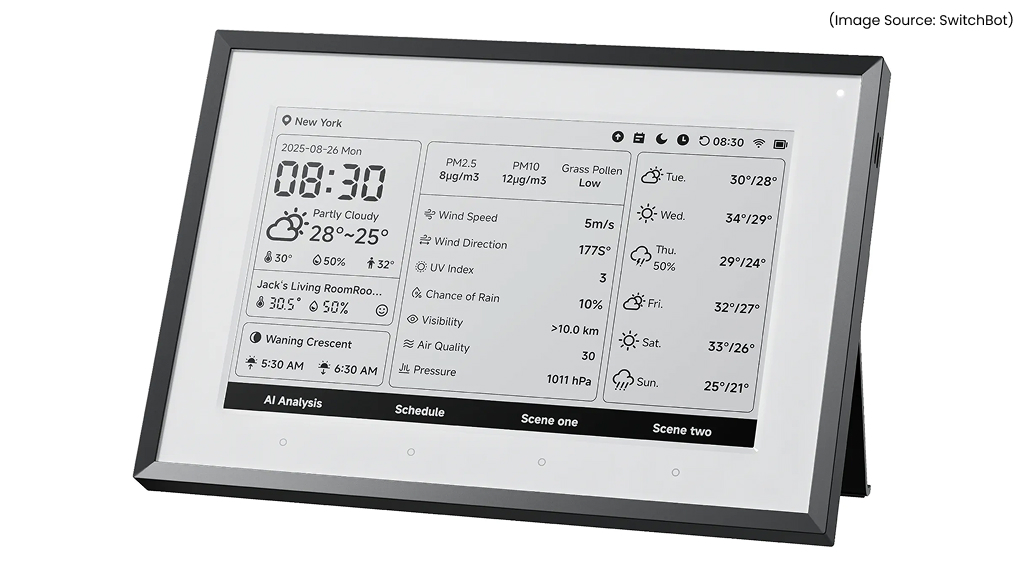
While CES 2026 featured several digital picture frames built around E Ink’s advanced color e-paper displays, SwitchBot stood out by using monochrome E Ink in a far more practical way. Instead of art or photos, the SwitchBot Weather Station turns the familiar black-and-white e-reader-style screen into a dedicated, glanceable information hub for your home. Its focus is simple but effective: delivering clear, always-on weather and environmental data without distractions.
The Weather Station features a 7.5-inch E Ink display housed in a minimal black frame that can sit on a table or mount on a wall, making it well suited for entryways or kitchens. The screen shows essential information such as the date and time, sunrise and sunset, a six-day weather forecast, air quality, and indoor temperature and humidity measured by built-in sensors. Thanks to E Ink’s low power consumption, the device is rated for up to three years of battery life.
Beyond raw data, the Weather Station integrates with popular calendar platforms, allowing upcoming events to appear alongside weather details. It also connects to the SwitchBot ecosystem via the SwitchBot Hub, offering limited smart home control and scene triggering. AI features are intentionally restrained, providing daily weather summaries, contextual insights, clothing suggestions, and the occasional motivational quote for gloomy days.
Pricing and availability have yet to be announced, but the SwitchBot Weather Station exemplifies a growing CES 2026 trend: AI-powered home devices that prioritize usefulness and clarity over constant interaction, delivering information you actually need at a glance.
8. Shokz OpenFit Pro
(Source Image: Shokz)
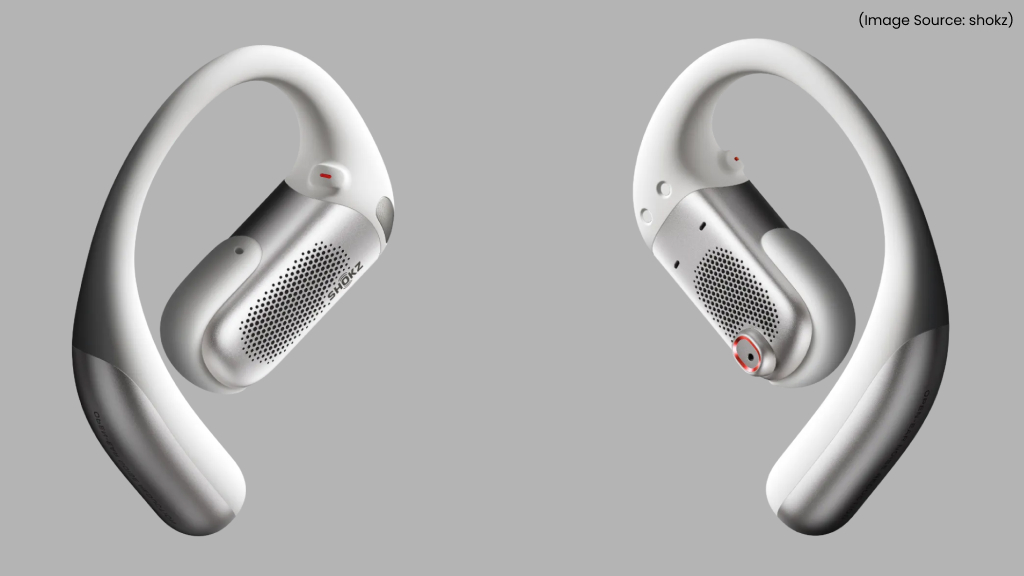
Shokz OpenFit Pro marks a major leap for open-ear audio, becoming the first open-ear headphones to feature TÜV-certified noise reduction without sacrificing comfort or situational awareness. Unveiled at CES 2026 with a premium price tag of $399, the OpenFit Pro builds on Shokz’s two decades of bone- and air-conduction expertise to solve one of open-ear audio’s biggest challenges: managing ambient noise without sealing the ear canal.
At the core is an adaptive, ear-specific noise reduction system powered by a triple-microphone array and AI-driven algorithms that adjust to ear shape, fit, and surrounding conditions in real time. Sound quality is equally impressive, thanks to large 11×20mm dual-diaphragm drivers and Shokz SuperBoost technology, delivering fuller bass and reduced distortion. Support for Dolby Atmos and dynamic head tracking adds a spatial, immersive layer rarely seen in open-ear designs.
Designed for all-day wear, the ergonomic earhook and Ultra-Soft Silicone provide a secure, pressure-free fit ideal for workouts, commuting, or office use. Battery life reaches up to 12 hours per charge, with 50 hours total using the case, while IP55 durability, wind-resistant calls, Bluetooth 6.1 multipoint, and reliable physical buttons round out a feature set built for real-world use.
9. Soundcore Aerofit 2 Pro
(Source Image: Soundcore)
Most earbuds are designed to shut the world out by sealing the ear canal, making them ideal for music and podcasts, but not always practical for everyday life. Runners, commuters, and parents often need to stay aware of their surroundings, which is why open-ear earbuds have surged in popularity. They deliver private audio while letting in outside sounds, offering a safer and more comfortable alternative to traditional in-ear designs.
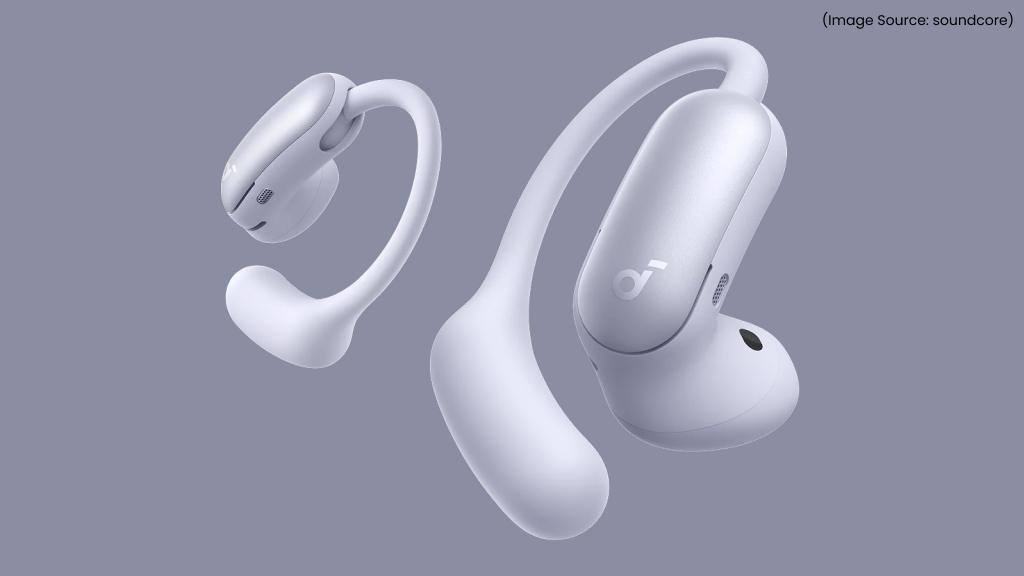
But, Open-ear earbuds typically can’t offer noise cancellation. Soundcore’s AeroFit 2 Pro changes that. Named a CES 2026 Innovation Awards Honoree, it’s the first open-ear earbud with adaptive ANC, thanks to a clever adjustable ear-hook design. Users can keep the drivers outside the ear canal for full awareness, or pivot them inward to create a semi-sealed fit for noise reduction.
With five levels of mechanical adjustment, Soundcore’s Adaptive ANC 3.0, and a six-microphone array, the AeroFit 2 Pro delivers surprisingly effective noise control, without forcing users to choose between comfort and focus.
10. Roborock Qrevo Curv 2 Flow
(Source Image: Roborock)
Robot vacuum mops have become commonplace, but even premium models tend to share one persistent weakness: cleaning along edges and into corners. Traditional circular mop pads simply can’t reach beyond the robot’s body, leaving baseboards, furniture edges, and tight corners partially untouched no matter how many passes the robot makes.
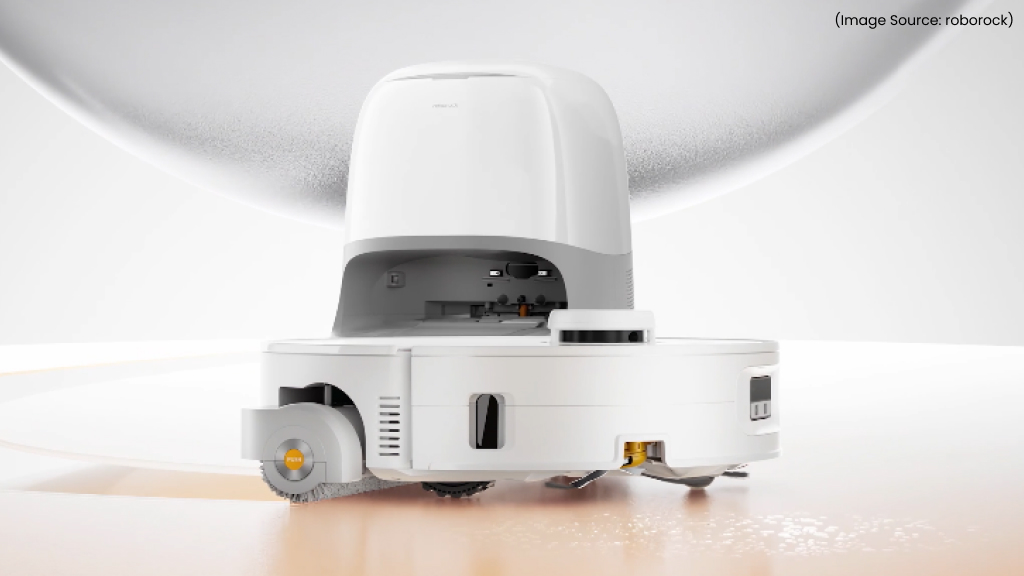
Roborock’s new Qrevo Curv 2 Flow tackles this problem with an elegantly simple solution, a wide, self-extending roller mop. Measuring 10.6 inches (270 mm), the roller automatically slides beyond the robot’s chassis, allowing it to clean parallel to walls and reach within just 10 mm of edges and corners without repeatedly bumping into them. It’s a major step forward in real-world floor coverage.
The roller mop spins at 220 RPM and applies 15 newtons of downward pressure, roughly equivalent to hand-scrubbing, while eight hydration points continuously supply clean water. A built-in scraper removes dirt and residue in real time, sending dirty water directly to a separate tank. This ensures the mop stays clean throughout each session, making it more effective against greasy films and sticky spills.
For homes with mixed flooring, the Qrevo Curv 2 Flow includes smart carpet protection. The mop lifts by 15 mm when carpets are detected and deploys a physical Roller Shield to prevent moisture transfer, guided by Roborock’s Beryl Light sensor. Maintenance is equally thoughtful, with a foldable roller mop and easily removable components for occasional manual cleaning.
Launched following its CES 2026 debut, the Roborock Qrevo Curv 2 Flow is now available for $849.99 during an early promotion (regular price $999.99), positioning it as a premium, but genuinely practical, upgrade in robotic floor care.
11. Hypershell X Ultra

(Source Image: Hypershell)
You may not be shopping for an exoskeleton just yet, but Hypershell’s X Ultra is worth experiencing if you get the chance. Shown at CES 2026, this lightweight, AI-powered wearable is designed to support, not replace, human movement, making activities like walking, hiking, and climbing feel noticeably easier. Weighing just 1.8 kg, it adapts in real time to terrain and motion, offering multiple modes for stairs, hills, snow, and more.
Hypershell claims it can reduce physical exertion by up to 40 percent, with a battery rated for roughly 30 km and hot-swappable packs. Beyond outdoor adventure, the accessibility potential is compelling, helping users with limited mobility move more comfortably in everyday settings. At around $2,000, it’s a premium glimpse into the future of personal mobility.
12. Samsung Galaxy Z TriFold
(Source Image: Samsung)
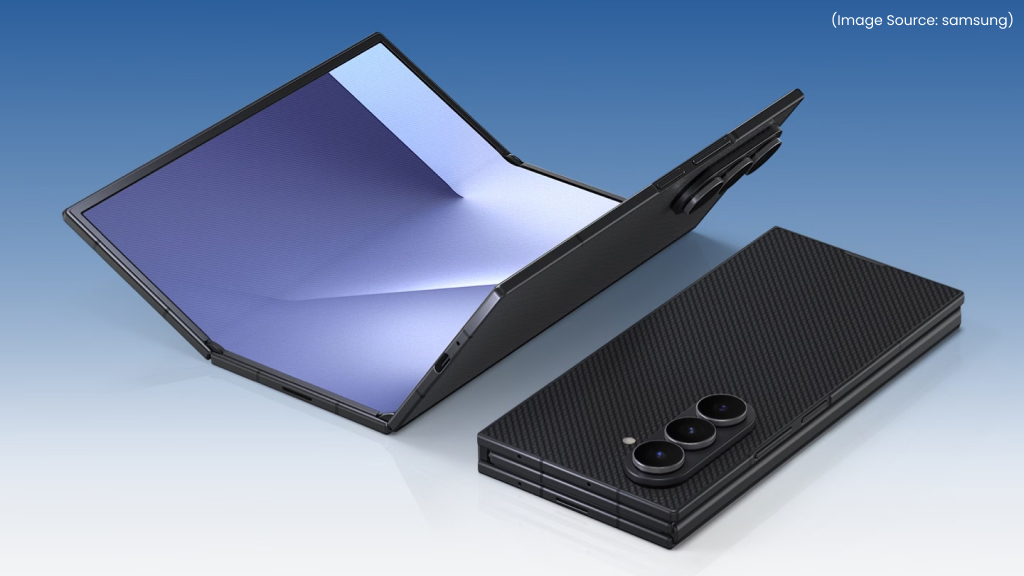
Unveiled at CES 2026, the Samsung Galaxy Z TriFold is one of the boldest form-factor experiments Samsung has brought to market so far. Unlike traditional foldables, it uses a dual-hinge, three-panel design that folds down to a 6.5-inch phone and opens up into a massive 10-inch AMOLED tablet, effectively replacing the need for a separate tablet or even a lightweight laptop for some users.
Powered by the Snapdragon 8 Elite chipset with 16GB of RAM and up to 1TB of storage, the TriFold is clearly aimed at power users. It features a versatile camera setup led by a 200MP primary sensor, a 5,600mAh battery with 45W charging, and software optimized for multitasking across multiple panels. Samsung DeX further enhances productivity by enabling a desktop-like experience on the larger screen.
Currently available in Korea, the Galaxy Z TriFold is expected to launch in the U.S. later this year, with premium “halo” pricing anticipated.
13. Withings Body Smart 2
(Source Image: Withings)
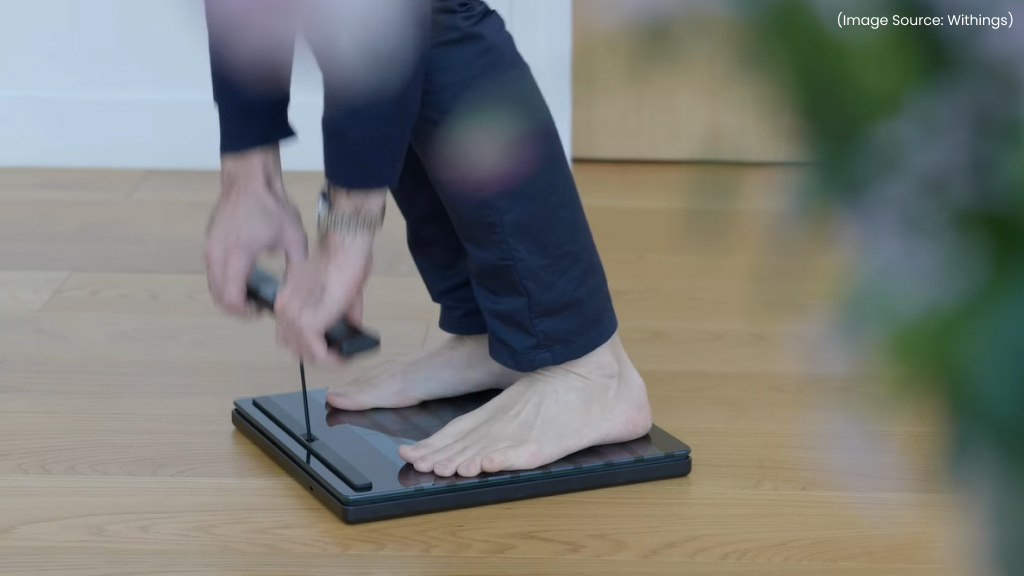
Unveiled at CES 2026, the Withings Body Scan 2 is a premium, AI-powered smart scale that the company positions as a full “home longevity station,” not just a tool for tracking weight. Designed for people focused on preventive health, it measures more than 60 biomarkers during a 90-second scan, with a strong emphasis on cardiovascular and metabolic health.
Using technologies like Impedance Cardiography (ICG) and Bioimpedance Spectroscopy (BIS), the scale assesses metrics such as vascular and heart age, arterial health, visceral fat, ECG readings, and early indicators of conditions like hypertension risk, atrial fibrillation, and glucose dysregulation. Some metabolic insights are gathered through tiny amounts of foot sweat, far less invasive than blood or urine testing.
A retractable handle with a built-in color display houses additional sensors, while AI analyzes the data to generate actionable insights and a “Health Trajectory” report that estimates whether users are gaining or losing healthy years over time.
The Body Scan 2 is expected to launch in Q2 2026 for $600 (pending FDA clearance for select features). It’s expensive, but it represents a meaningful shift toward viewing weight as just one part of overall health.
Honorable Mention: Lego Smart Play
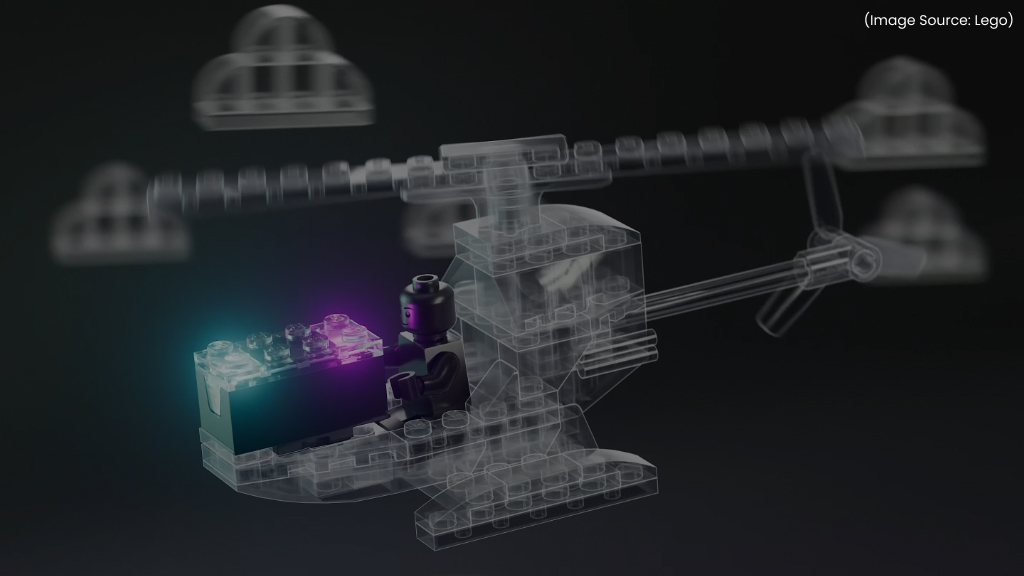
(Source Image: Lego)
Unveiled at CES 2026, LEGO SMART Play is the company’s ambitious new platform designed to make brick-built creations interactive, without relying on screens. By embedding advanced, invisible technology directly into select bricks, LEGO is transforming traditional builds into responsive experiences that can react to movement, sound, and touch.
At the heart of the system is the LEGO SMART Brick, which features a custom-designed chip smaller than a single LEGO stud. Despite its tiny size, the chip integrates sensors, accelerometers, light and sound detection, a miniature speaker, a synthesizer, and wireless charging. Combined with LEGO SMART Tags and SMART Minifigures, these components allow builds to trigger sounds and behaviors based on gestures and motion.
Announced by LEGO Chief Product & Marketing Officer Julia Goldin and Creative Play Lab head Tom Donaldson, SMART Play was described as LEGO’s most significant innovation since the Minifigure debuted in 1978. Backed by more than 20 patents, the platform blends creativity, storytelling, and technology, while remaining fully compatible with the existing LEGO System-in-Play.
CES 2026 made one thing clear; innovation isn’t just about incremental upgrades anymore, it’s about rethinking how technology fits into everyday life. From genuinely practical breakthroughs to bold experiments that push the boundaries of design and usability, this year’s showfloor captured the industry’s restless creativity. Not every gadget felt essential, and some ideas were clearly prototypes of a much bigger vision, but together they painted a compelling picture of what’s next.
Whether it’s smarter mobility, flexible form factors, or wellness-focused tech, the trends emerging from CES 2026 suggest a future that’s more adaptive, more personalized, and occasionally a little strange, in the best way possible. If nothing else, this year’s lineup proved that the tech world is still willing to take risks, and that’s exactly what keeps CES exciting year after year!