



Every new Wi-Fi standard has traditionally been associated with faster speeds. Higher bandwidth, quicker downloads, and improved performance have transformed the way people stream content, play online games, attend video calls, and connect multiple devices. Yet, despite these advances, unreliable Wi-Fi continues to be a common frustration. Buffering videos, frozen video calls, and sudden lag during online games can occur even with a high-speed broadband connection. In many cases, the real bottleneck isn’t the internet connection itself but the wireless network.
The challenge has become even more apparent as homes fill up with connected devices. Smartphones, laptops, smart TVs, gaming consoles, security cameras, smart speakers, and a growing number of IoT devices all compete for the same wireless resources. In apartment buildings and densely populated neighbourhoods, where multiple routers operate in close proximity, congestion becomes almost unavoidable, resulting in slower and less consistent connections.
Recognising these changing demands, Wi-Fi 8 takes a different approach. Instead of focusing solely on increasing peak speeds, the next-generation wireless standard aims to deliver a more dependable connection by reducing interference, lowering latency, and helping networks perform more consistently in busy environments. For most users, that shift could have a far greater impact on everyday internet use than another increase in theoretical speeds.
What Is Wi-Fi 8 and Why Is It Different?
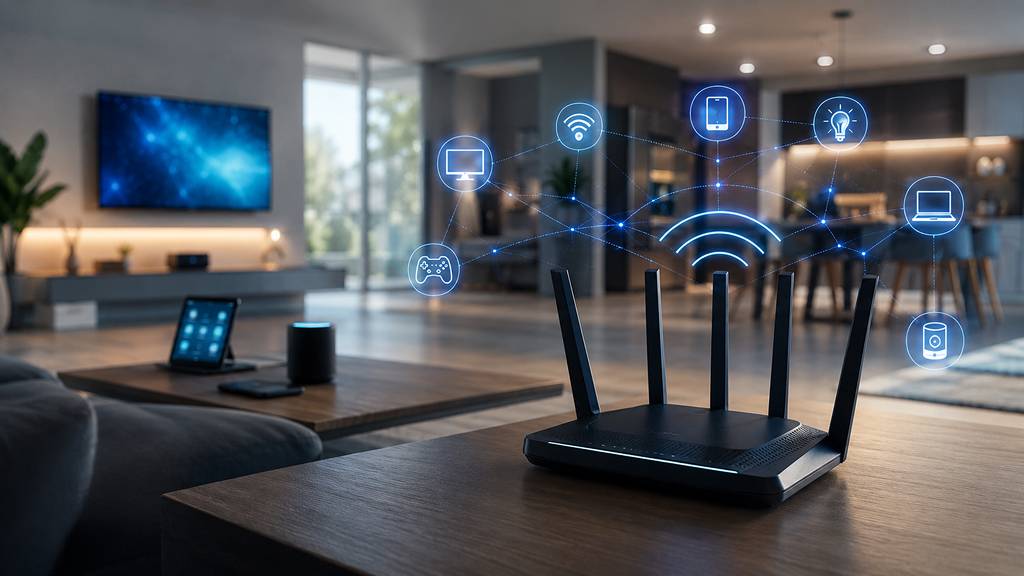
Wi-Fi 8 is the next generation of wireless networking technology currently being developed under the IEEE 802.11bn standard. Expected to arrive in certified consumer devices around 2028, it will succeed Wi-Fi 7 while building on many of the technologies introduced with Wi-Fi 6, Wi-Fi 6E, and Wi-Fi 7. Like its predecessor, Wi-Fi 8 will continue to operate across the 2.4GHz, 5GHz, and 6GHz frequency bands, support technologies such as Multi-Link Operation (MLO), and remain backward compatible, allowing older Wi-Fi devices to continue working alongside newer hardware.
The biggest difference is that Wi-Fi 8 isn’t trying to redefine wireless networking through faster peak speeds alone. Instead, it has been developed around a concept known as Ultra High Reliability (UHR), which focuses on improving how wireless networks perform. The goal is to minimise interference, reduce latency, and make more efficient use of available network resources so that connections remain smooth and responsive even when dozens of devices are active simultaneously. These improvements are particularly valuable in apartments, offices, airports, shopping centres, and smart homes, where multiple Wi-Fi networks often compete for the same airwaves.
The evolution of Wi-Fi reflects the way internet usage has changed over the years. Wi-Fi 5 brought a significant boost in wireless speeds, making HD streaming and online gaming far more practical. Wi-Fi 6 shifted the emphasis towards efficiency by enabling routers to communicate with multiple devices at the same time, while Wi-Fi 7 expanded bandwidth through wider 320MHz channels and MLO, allowing compatible devices to use multiple frequency bands simultaneously for higher throughput.
Today, however, internet speed is no longer the biggest concern for most households. A modern broadband connection is usually fast enough to handle 4K streaming, cloud backups, video conferencing, online gaming, and dozens of networked devices. What users notice far more often are buffering videos, frozen video calls, lag during multiplayer games, or smart home devices that randomly lose connectivity. In many cases, these problems have less to do with broadband speeds and more to do with how efficiently the wireless network manages growing traffic.
How Wi-Fi 8 Makes Wireless Networks More Reliable?

Slow or inconsistent Wi-Fi isn’t always the result of a poor internet connection. More often, the problem lies within the wireless network itself. As the number of connected devices continues to grow and neighbouring Wi-Fi networks compete for the same channels, interference becomes more common, resulting in higher latency, slower data transfers, and occasional connection drops.
To tackle these challenges, Wi-Fi 8 introduces a range of improvements that help routers and devices communicate more efficiently. Instead of relying solely on higher bandwidth, the new standard focuses on using existing wireless resources more intelligently, ensuring that networks remain stable and responsive even in crowded environments.
Smarter Coordination Between Routers
Traditional Wi-Fi routers operate independently, with little awareness of the networks around them. In locations such as apartment buildings, offices, shopping centres, and airports, this often leads to neighbouring routers transmitting at the same time, creating interference that affects everyone connected to the network.
To minimise this interference, Wi-Fi 8 introduces enhanced Multi-Access Point Coordination, which enables compatible access points to exchange information and coordinate their transmissions. By working together instead of competing for airtime, nearby routers can reduce signal interference, make better use of available channels, and provide a more consistent wireless experience in densely populated areas.
More Efficient Use of Wireless Spectrum
Wide wireless channels are capable of carrying large amounts of data, but they aren’t always utilised efficiently. A security camera, for example, doesn’t require the same bandwidth as a laptop downloading large files or a television streaming 4K content. Treating every device the same can leave valuable network resources underutilised.
To improve efficiency, Wi-Fi 8 introduces technologies such as Dynamic Sub-Band Operation (DSO) and Non-Primary Channel Access (NPCA). These features allow routers to divide wider channels into smaller sections when required and let devices continue transmitting data even if their preferred channel is temporarily unavailable. By allocating bandwidth more intelligently, Wi-Fi 8 helps reduce congestion and keeps traffic flowing more smoothly across the network.
Lower Latency for Gaming and Video Calls
Although download speeds often receive the most attention, latency has an equally important role in determining how responsive a network feels. Whether it’s an online game, a video conference, a cloud gaming session, or a virtual reality application, even small delays can affect the overall experience.
Wi-Fi 8 reduces latency by improving how devices access the network and by minimising unnecessary interference between transmissions. Instead of forcing multiple devices to compete for airtime, compatible routers can coordinate traffic more efficiently, reducing delays and packet loss. The result is smoother gameplay, clearer video calls, and a more responsive connection during demanding online activities.
Better Performance for Smart Homes
Modern homes now contain far more smart devices than they did just a few years ago. Alongside smartphones and laptops, many households also rely on smart TVs, streaming devices, security cameras, video doorbells, smart speakers, lighting systems, robot vacuum cleaners, and a growing number of IoT products that remain connected throughout the day.
Individually, these devices consume relatively little bandwidth. Collectively, however, they place a constant demand on the wireless network. Wi-Fi 8 is designed to manage this growing traffic more efficiently by allocating network resources more intelligently and reducing unnecessary contention between devices.
Smoother Roaming Across Larger Spaces
Moving around a large home, office, hotel, or university campus often requires a device to switch between multiple access points. Although this handover usually happens automatically, brief interruptions can still occur, sometimes affecting video calls or other real-time applications.
Wi-Fi 8 improves this roaming process by allowing compatible devices to transition more smoothly between access points while maintaining an active connection. This reduces interruptions and helps users stay connected as they move throughout a building. The improvement will be especially beneficial for mesh Wi-Fi systems, where seamless roaming is one of the biggest advantages.
Improved Battery Life for Connected Devices
Battery-powered devices spend much of their time waiting for data rather than actively transmitting it. Wi-Fi 8 builds on the power-saving mechanisms introduced in earlier standards by allowing compatible devices to remain in low-power states for longer without sacrificing responsiveness.
These enhancements are expected to benefit devices such as smart sensors, wearable technology, wireless security cameras, and other IoT products that need to remain connected for extended periods while consuming as little power as possible.
Better Performance at the Edge of the Network
Maintaining a strong Wi-Fi signal becomes increasingly difficult as devices move farther away from the router or encounter obstacles such as walls and floors. Outdoor devices, including security cameras and smart doorbells, often experience these challenges.
To improve performance in these situations, Wi-Fi 8 enhances signal processing and error correction, allowing devices to maintain more stable connections even when signal strength begins to weaken. Instead of immediately reducing speeds or dropping packets, the network can adapt to changing conditions more effectively, delivering a smoother and more dependable experience in areas where Wi-Fi coverage is typically weaker.
Wi-Fi 8 vs Wi-Fi 7: What’s the Difference?
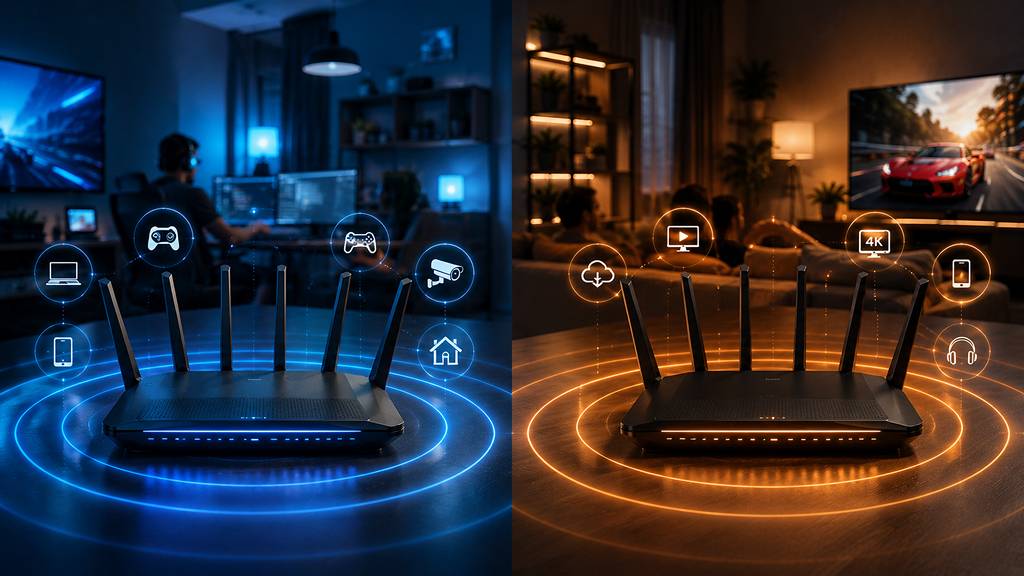
At first glance, Wi-Fi 8 and Wi-Fi 7 appear to have a lot in common. Both operate across the 2.4GHz, 5GHz, and 6GHz frequency bands, support MLO, and are designed to handle increasingly demanding wireless workloads. Users upgrading from older standards such as Wi-Fi 5 or Wi-Fi 6 will notice a significant improvement with either technology.
The real difference lies in what each standard sets out to achieve. Wi-Fi 7 pushes the boundaries of wireless performance with wider 320MHz channels, higher throughput, and advanced modulation techniques that maximise data transfer speeds. Instead of introducing another major jump in theoretical speeds, it focuses on reducing network congestion, improving coordination between access points, and delivering a more stable experience when multiple devices are connected simultaneously.
For many users, this difference will be more meaningful than another increase in peak bandwidth. A modern broadband connection already provides enough speed for streaming, gaming, video conferencing, and cloud-based applications. The more common challenge is maintaining consistent performance when numerous devices are sharing the same wireless network. By addressing these real-world conditions, Wi-Fi 8 aims to make everyday connectivity smoother rather than simply faster.
That doesn’t mean Wi-Fi 7 is becoming obsolete. It remains one of the most capable wireless standards available and will continue to offer outstanding performance for years to come. Wi-Fi 8 simply represents the next stage in the evolution of wireless networking, placing greater emphasis on efficiency, stability, and dependable performance.
When Will Wi-Fi 8 Be Available, and Should You Wait?
Although Wi-Fi 8 is attracting plenty of attention, it is still under development. The IEEE is continuing to finalise the 802.11bn specification, while chipset manufacturers and networking companies are preparing the hardware that will eventually support the new standard. Fully certified Wi-Fi 8 routers, smartphones, laptops, and other consumer devices are expected to become widely available around 2028, although some manufacturers may introduce pre-certification products before then.
For most people, however, waiting specifically for Wi-Fi 8 isn’t necessary. If you’re already using a Wi-Fi 6, Wi-Fi 6E, or Wi-Fi 7 router, your current setup is more than capable of handling everyday activities such as streaming, gaming, video calls, and smart home devices. By the time Wi-Fi 8 becomes widely available, many of today’s routers will naturally be due for an upgrade.
When it does arrive, Wi-Fi 8 is likely to deliver its biggest improvements in homes filled with smart devices, apartment buildings with numerous neighbouring networks, offices, and other high-density environments where wireless congestion is common. Existing Wi-Fi devices will continue to work thanks to backward compatibility, but compatible Wi-Fi 8 hardware will be required to take full advantage of the new standard’s capabilities.
Wi-Fi 8 may not deliver the dramatic speed boost that previous wireless standards promised, but its focus on reliability could make a bigger difference. By reducing interference, lowering latency, and improving the way connected devices share network resources, it aims to deliver smoother, more consistent performance in increasingly crowded environments. While certified devices are still a few years away, Wi-Fi 8 represents the next logical step in the evolution of wireless networking.