



The self-hosting movement has grown rapidly in recent years, fueled by affordable hardware, mature open-source software, and an abundance of online resources that make it easier than ever to run services from home. What was once considered a niche hobby reserved for enthusiasts and system administrators is now accessible to almost anyone willing to invest a little time and effort.
From media servers and cloud storage platforms to password managers and note-taking applications, self-hosting allows users to retain greater control over their data while reducing dependence on subscription-based services.
However, not every service benefits equally from being brought in-house. Some workloads demand levels of reliability, security, and operational expertise that can quickly transform a rewarding project into a source of constant maintenance and frustration.
Before moving every service onto your own infrastructure, it is worth understanding where self-hosting delivers genuine value and where the trade-offs often outweigh the rewards.
If you’re building a homelab or exploring self-hosting for the first time, here are five things that are usually better left to specialized providers.
1. Running Your Own Email Server

Running your own email server often feels like the logical next step for anyone serious about self-hosting. After all, email is one of the most widely used online services, and hosting it yourself promises complete control over your communications, your data, and your privacy. While setting up a mail server is far easier today than it was a decade ago, keeping it running reliably is a completely different challenge.
The biggest obstacle is not receiving emails but ensuring that the emails you send actually reach their destination. Major providers such as Gmail, Outlook, and Yahoo rely heavily on reputation systems and spam prevention mechanisms that are designed to block malicious or suspicious senders. As a result, emails originating from a residential connection or a small VPS provider often face additional scrutiny, regardless of whether the server is operated by a legitimate user.
Even if you correctly configure SPF, DKIM, and DMARC records, there is no guarantee that your messages will consistently arrive in recipients’ inboxes rather than being filtered as spam or rejected altogether. Beyond deliverability concerns, operating a public mail server means constantly dealing with spam, phishing attempts, and automated attacks.
Unlike many self-hosted applications that remain largely unnoticed, email servers are exposed to the wider internet and are routinely targeted by bots looking for vulnerabilities or opportunities to abuse the system. Keeping those threats under control requires ongoing maintenance, regular software updates, and additional security tools that many users may not anticipate when they first begin the project.
Reliability is another factor that makes self-hosted email demanding. While a temporary outage on a media server or file-sharing platform might be an inconvenience, email is a service that users expect to be available at all times. Any downtime can delay communications, disrupt workflows, and create unnecessary complications, especially if email is being used for business or other critical purposes.
For hobbyists who enjoy learning about mail infrastructure, running an email server can be a fascinating and rewarding challenge. However, for most people, the effort required to maintain deliverability, security, and uptime far outweighs the benefits, making email one of the few services that is usually better left to dedicated providers.
2. Payment Processing Systems

At first glance, self-hosting a payment processing system may seem like an attractive way to avoid transaction fees and maintain complete control over customer payments. However, payment processing is one of those areas where the responsibilities extend far beyond the software itself. The moment payment card information touches your infrastructure, you move beyond simply running an application and become responsible for protecting highly sensitive financial data.
That responsibility comes with strict compliance requirements. Organizations that process, transmit, or store cardholder information must adhere to PCI DSS (Payment Card Industry Data Security Standard), a comprehensive set of security requirements designed to safeguard payment data. Achieving compliance involves far more than deploying an open-source payment platform, requiring secure infrastructure, encrypted communications, access controls, vulnerability management, auditing, and continuous monitoring.
Security concerns make the situation even more difficult. Payment systems are among the most attractive targets for cybercriminals because they handle information that can be directly monetized. A single vulnerability, whether caused by a software bug, server misconfiguration, or overlooked update, can expose customer data and result in significant financial and legal consequences. In addition to regulatory penalties and reputational damage, businesses may also face restrictions from payment networks that can severely impact their ability to operate.
Perhaps the most compelling reason to avoid self-hosting payment infrastructure is that established providers already solve these problems exceptionally well. Services such as Stripe, PayPal, and Square invest heavily in fraud detection, compliance, security, and reliability, allowing businesses to focus on serving customers rather than defending financial systems. While their transaction fees may seem expensive at first, they are often insignificant compared to the cost and risk of building and maintaining a secure payment platform from scratch.
3. Production DNS Infrastructure

DNS (Domain Name System) acts as the directory that allows internet users to locate websites and services. Every website visit, API request, and email delivery depends on DNS records directing traffic to the correct destination. When everything is working properly, most people rarely think about it. When it fails, however, entire services can appear to disappear from the internet.
This is what makes self-hosting authoritative DNS particularly risky. Unlike many self-hosted applications, DNS is a critical dependency for everything built on top of it. If your authoritative DNS server becomes unavailable or misconfigured, users may be unable to reach your website, send email to your domain, or access applications that otherwise remain fully operational.
In many cases, the underlying services continue running perfectly, but nobody can find them. Because DNS records are cached across the internet, even simple mistakes can take hours to fully propagate, making troubleshooting more frustrating than many other self-hosted services.
Maintaining a reliable DNS environment also requires a level of redundancy that is difficult for most individuals and small organizations to achieve. Public-facing DNS servers are frequent targets for DDoS attacks, amplification attacks, and other forms of abuse that can disrupt service or damage the reputation of your network. Protecting against these threats often requires geographically distributed infrastructure, automated failover systems, and continuous monitoring.
Managed DNS providers such as Cloudflare and Amazon Route 53 exist because DNS reliability is far more complicated than running a single server. Considering that these services often cost very little while providing global redundancy and built-in protection against attacks, self-hosting production DNS rarely offers enough advantages to justify the additional operational burden.
4. Large-Scale Video Streaming Platforms

Self-hosting a media server has become one of the most popular projects in the homelab community, and for good reason. Applications such as Plex and Jellyfin make it relatively easy to stream movies, TV shows, and personal content to family members across multiple devices. The challenge begins when a personal media server evolves into a platform intended to serve a larger audience.
Supporting a video streaming service can be surprisingly demanding, placing heavy pressure on bandwidth, storage infrastructure, and hardware resources, particularly as the number of viewers increases. A handful of users watching content occasionally may not place much strain on a system, but supporting hundreds or thousands of viewers introduces a completely different set of requirements. High-definition and 4K video streams consume significant bandwidth, and those costs can escalate quickly as viewership grows.
Storage requirements can also become substantial, particularly when maintaining large content libraries or multiple versions of the same video optimized for different devices and connection speeds. In addition, many streaming platforms rely on transcoding, which converts video into formats suitable for various screens and network conditions. This process can place heavy demands on CPUs and GPUs, requiring hardware investments that many self-hosters underestimate.
Technical challenges aside, the real test is delivering the level of speed, reliability, and convenience that viewers now consider standard. They expect fast load times, smooth playback, minimal buffering, and reliable access regardless of their location. Delivering that experience often requires content delivery networks, distributed infrastructure, intelligent caching, and sophisticated monitoring systems. At that point, self-hosting begins to resemble operating a commercial streaming platform rather than maintaining a personal project, making it difficult to justify for all but the most specialized use cases.
5. Kubernetes for Small Homelabs
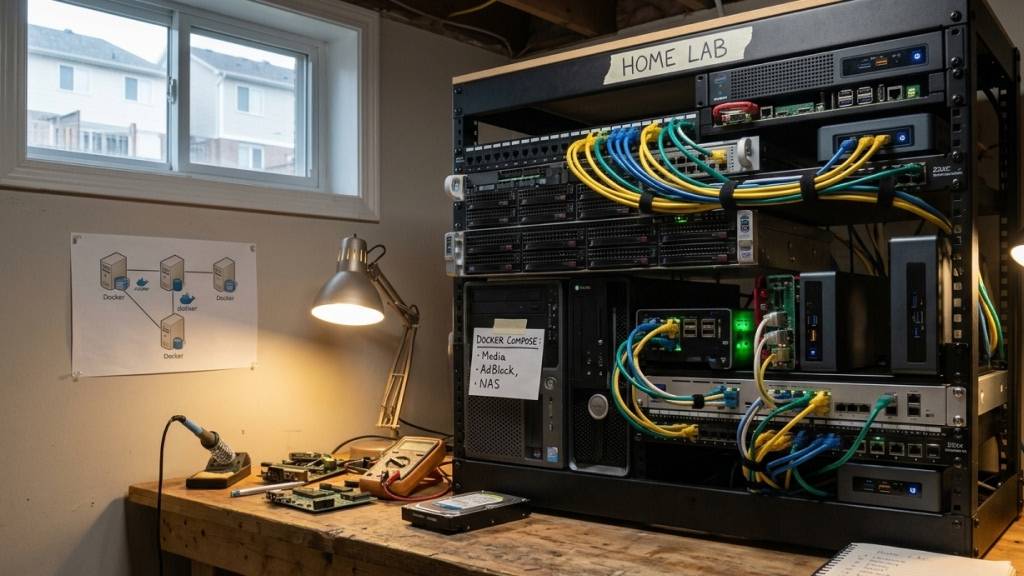
Kubernetes, an open-source container orchestration platform originally developed by Google, has become synonymous with modern infrastructure. Designed to automate the deployment, scaling, and management of applications across multiple servers, it has become the standard for running containerized workloads in enterprise environments. Its popularity has also inspired many self-hosting enthusiasts to deploy it in their homelabs, often as a way to learn skills that are increasingly valuable in cloud computing and DevOps.
The platform was designed to solve challenges associated with operating large, distributed applications across clusters of servers. Most homelabs, however, do not face those challenges. Running a handful of applications such as Home Assistant, Nextcloud, Jellyfin, or a personal dashboard rarely requires the sophisticated orchestration capabilities that Kubernetes provides.
What Kubernetes does introduce is a considerable amount of operational overhead. Even lightweight distributions require administrators to manage networking, storage, certificates, permissions, upgrades, backups, and monitoring. Each additional layer creates more moving parts, increasing both the likelihood of failures and the effort required to diagnose them.
While these challenges can be valuable learning opportunities, they can also become frustrating when essential services stop working because of an issue buried deep within the cluster. For many self-hosters, Docker Compose provides a much more practical balance between functionality and simplicity. It delivers containerized deployments, persistent storage, and service management without introducing the operational overhead associated with a full orchestration platform.
Kubernetes remains an excellent technology to learn and experiment with, particularly for those looking to develop professional skills. However, unless your environment genuinely requires the capabilities it provides, deploying it as the foundation of a small homelab can result in an unnecessarily complicated setup that demands far more attention than simpler alternatives such as Docker Compose.
At its best, self-hosting is about solving problems on your own terms rather than simply running as much infrastructure as possible. Many services can be self-hosted successfully and provide meaningful benefits, whether that’s greater control over your data, improved privacy, or lower long-term costs. Others, however, come with responsibilities that extend far beyond installing and maintaining software, requiring continuous attention to security, reliability, compliance, or performance.
The most effective self-hosting setups are rarely the ones that host the most services; they are the ones that strike the right balance between independence and practicality. Knowing where that balance lies can help ensure that self-hosting remains an enjoyable and empowering experience rather than an endless exercise in troubleshooting.